MongoDB Charts
MongoDB Charts MongoDB Charts is a data visualization tool that lets you create interactive charts and dashboards directly from MongoDB data—without writing complex code or exporting data. It is a built-in feature of MongoDB...


MongoDB Charts MongoDB Charts is a data visualization tool that lets you create interactive charts and dashboards directly from MongoDB data—without writing complex code or exporting data. It is a built-in feature of MongoDB...
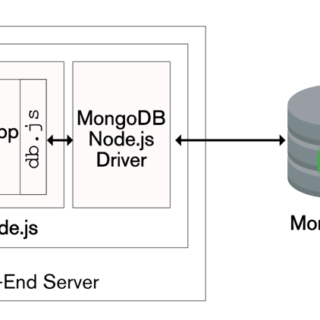
MongoDB Drivers are official libraries that allow applications to connect to, read from, and write to MongoDB using native programming languages. They handle connections, authentication, CRUD operations, and performance optimizations for you. Built and...
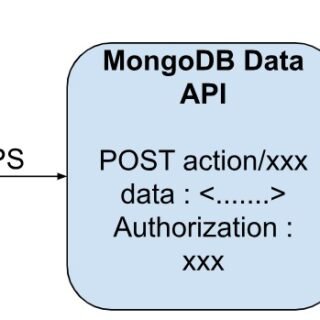
MongoDB Data API 🌐🚀 The MongoDB Data API lets you access and manipulate MongoDB data over HTTPS using REST-style endpoints—without drivers, sockets, or persistent connections. It’s part of MongoDB Atlas and is ideal for...
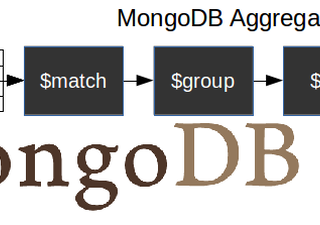
MongoDB Schema Validation 🛡️📐 In MongoDB, Schema Validation lets you enforce rules on documents inside a collection—while still keeping MongoDB’s flexible schema nature. It helps prevent bad/invalid data from being inserted or updated. Why...
MongoDB Indexing & Search In MongoDB Indexing & Search are used to speed up queries, and search features help you efficiently find data in large collections. Without indexes, MongoDB performs a collection scan, which is...
MongoDB Aggregation $out In MongoDB, $out is an aggregation stage used to write the result of an aggregation pipeline into a new collection. Think of $out as: “Save aggregation result permanently” What is $out?...
MongoDB Aggregation $lookup In MongoDB Aggregation $lookup is used to join data from another collection during aggregation. Think of $lookup as: LEFT OUTER JOIN in SQL What is $lookup? Joins two collections Combines documents based...
MongoDB Aggregation $count In MongoDB Aggregation $count is an aggregation stage used to count the number of documents passing through the pipeline. Think of $count as: SQL → COUNT(*) What is MongoDB Aggregation $count? Counts...
MongoDB Aggregation $addFields ➕🧩 In MongoDB, the $addFields stage is used in an Aggregation Pipeline to add new fields or modify existing fields in documents without removing any existing data. What does $addFields do?...
MongoDB Aggregation $match 🎯 In MongoDB, the $match stage is used in an Aggregation Pipeline to filter documents based on conditions—just like WHERE in SQL or find() in MongoDB. What does $match do? Filters...