MongoDB Aggregation $count

MongoDB Aggregation $count
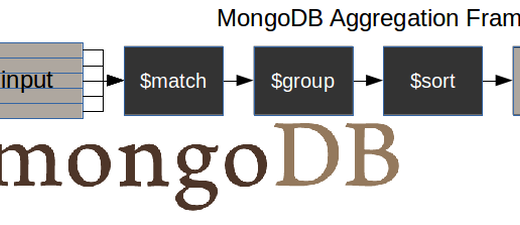
In MongoDB Aggregation $count is an aggregation stage used to count the number of documents passing through the pipeline.
Think of $count as:
SQL →
COUNT(*)
What is MongoDB Aggregation $count?
Counts documents in an aggregation pipeline
Returns the result as a new field
Ends the pipeline (no data after it)
1️⃣ Basic Syntax
The value is the output field name.
2️⃣ Simple Example (Count All Documents)
Scenario
Count all documents in the users collection.
Output
3️⃣ $count with $match (Most Common Use)
Scenario
Count users from Delhi.
$matchfilters documents$countcounts filtered result
4️⃣ $count with $group (Interview Tip)
Count number of documents per group.
$countcounts total documents$groupcounts per category
5️⃣ $count vs countDocuments() (Very Important)
| Method | Usage |
|---|---|
$count | Inside aggregation |
countDocuments() | Simple collection count |
estimatedDocumentCount() | Fast but approximate |
Example:
6️⃣ $count Rules & Limitations
✔ Must be a pipeline stage
✔ Usually placed at the end
✔ Returns one document only
✔ Field name cannot start with $
Key Points (Very Important for Exams & Interviews)
✔ $count counts documents in aggregation
✔ Similar to SQL COUNT(*)
✔ Used after $match, $lookup, etc.
✔ Outputs a single document
✔ Field name is user-defined
Common Interview Questions
Q1. What does $count do in MongoDB?
👉 Counts documents in aggregation pipeline
Q2. Where is $count used?
👉 Inside aggregation only
Q3. Can $count group data?
👉 ❌ No, use $group
Q4. $count vs countDocuments()?
👉 $count → aggregation
👉 countDocuments() → normal query
Summary
That’s everything you need to know about MongoDB Aggregation
$count.