
Rust Ownership
Rust Ownership – Complete Beginner Guide
Ownership is the most important concept in Rust.
It makes Rust unique and allows it to provide memory safety without a garbage collector.
If you understand ownership, you understand Rust.
In this beginner-friendly guide, you’ll learn:
What ownership is
The 3 ownership rules
Move semantics
Borrowing
References
Mutable vs immutable borrowing
Common mistakes
Real-world examples
Let’s dive in
What Is Ownership in Rust?
Ownership is Rust’s system for managing memory.
Instead of:
Garbage collection (like Java, Python)
Manual memory management (like C, C++)
Rust uses ownership rules checked at compile time.
This prevents:
Memory leaks
Null pointer errors
Data races
The 3 Rules of Ownership
Rust ownership follows three simple rules:
- Each value has a single owner
- There can only be one owner at a time
- When the owner goes out of scope, the value is dropped
Rule 1 – Each Value Has an Owner
Here:
sowns the StringWhen
mainends → memory is freed automatically
No garbage collector needed.
Rule 2 – Only One Owner at a Time (Move Semantics)
Here:
Ownership moves from
s1→s2s1becomes invalid
If you try:
Rust prevents double-free errors.
Cloning Instead of Moving
If you want to copy data:
Now:
s1owns originals2owns copy
But cloning costs memory.
Stack vs Heap (Important)
Primitive types like:
i32boolchar
Are copied automatically:
Because they are stored on the stack.
Borrowing in Rust
Instead of transferring ownership, you can borrow.
Notice &s1.
This is a reference.
Immutable Borrowing
- Does not take ownership
- Original variable remains usable
Borrowing Rules
You can have:
Multiple immutable references
OROne mutable reference
But NOT both at the same time.
Mutable Borrowing
- Only one mutable reference allowed
- Prevents data races
Borrow Checker (Rust’s Safety Guard)
Rust compiler checks:
No dangling references
No data races
No double free
No invalid memory access
All at compile time.
Dangling Reference Example (Prevented)
Rust prevents referencing memory that no longer exists.
Ownership in Functions
When passing values to functions:
Ownership moves into function.
To return ownership:
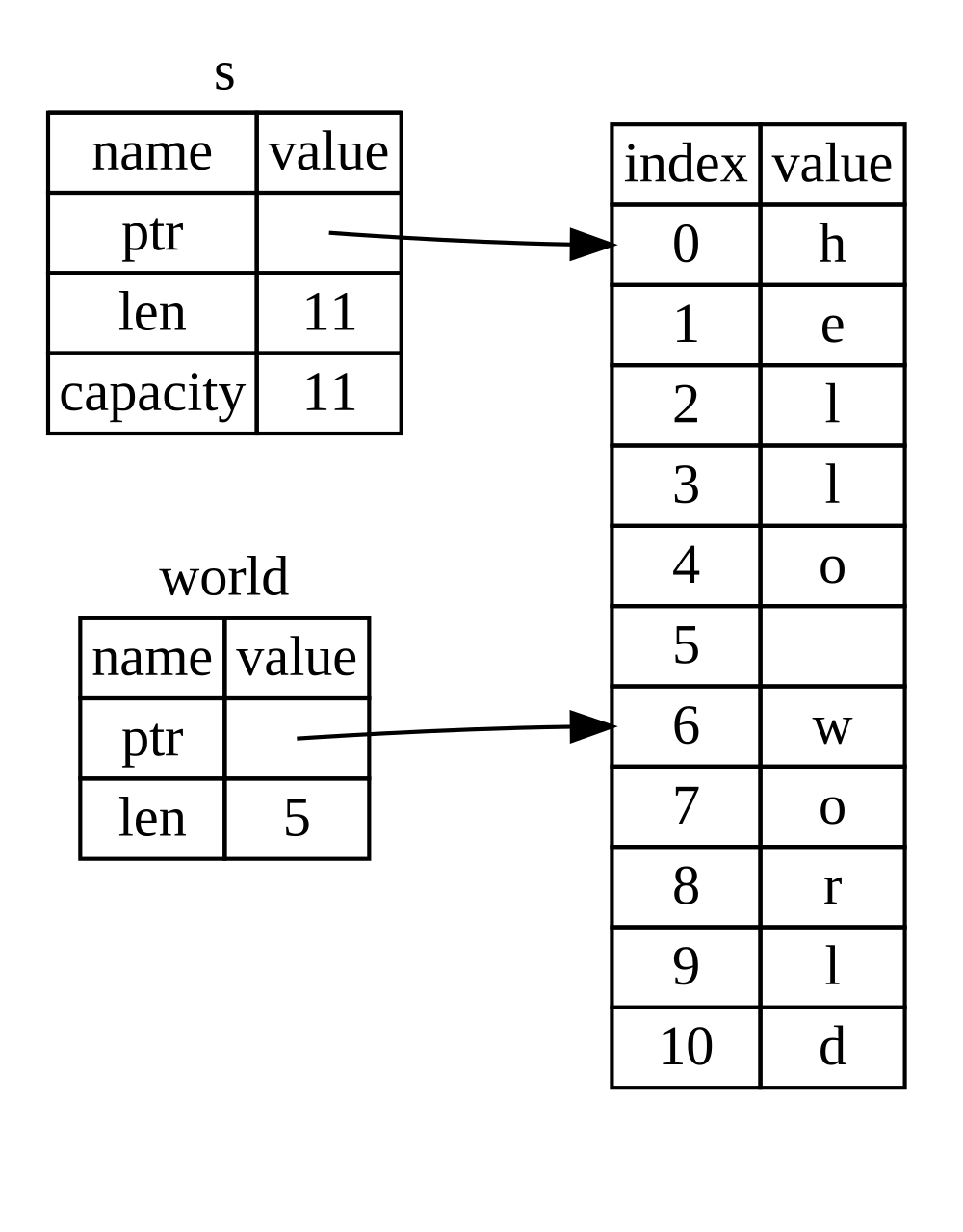
Ownership Summary Diagram
Why Ownership Is Powerful
- Memory safety
- No garbage collector
- Zero-cost abstraction
- Prevents data races
- Safe concurrency
Common Beginner Mistakes
- Trying to use moved value
- Confusing clone with move
- Multiple mutable references
- Forgetting
mutkeyword - Returning references to local variables
Best Practices
- Prefer borrowing over cloning
- Use
&strinstead ofStringwhen possible - Keep scopes small
- Understand stack vs heap
- Let compiler guide you
Frequently Asked Questions (FAQs)
1. What is ownership in Rust?
Ownership is Rust’s memory management system where each value has a single owner responsible for freeing memory.
2. What is move semantics?
Move semantics transfer ownership from one variable to another.
3. What is borrowing in Rust?
Borrowing allows referencing data without taking ownership.
4. Can Rust have multiple references?
Yes, multiple immutable references OR one mutable reference.
5. Why doesn’t Rust use garbage collection?
Rust ensures memory safety at compile time using ownership rules.
Conclusion
Rust ownership is the foundation of the language.
You learned:
Ownership rules
Move semantics
Borrowing
Mutable vs immutable references
Compiler safety
Once ownership “clicks,” Rust becomes much easier.
