SciPy Constants

SciPy Constants (Complete Explanation)
SciPy Constants are a collection of predefined scientific and mathematical constants provided by the module:
These constants are accurate, standardized, and ready to use, so you don’t have to memorize or manually define values like the speed of light, Planck’s constant, or gravitational constant.
Why Use SciPy Constants?
Using It helps because:
Values are highly accurate
Based on international standards (SI units)
Saves time & avoids calculation mistakes
Widely used in physics, chemistry, engineering
Importing SciPy Constants
Or import specific constants:
Commonly Used Scientific Constants
Mathematical Constants
Physical Constants
| Constant | Meaning |
|---|---|
c |
Speed of light (m/s) |
G |
Gravitational constant |
h |
Planck constant |
k |
Boltzmann constant |
N_A |
Avogadro number |
R |
Gas constant |
g |
Acceleration due to gravity |
Example:
Unit-Based Constants
SciPy also provides unit conversions.
Length
Mass
Time
Temperature
Constants with Units Information
You can access detailed info using physical_constants:
- Very useful for research & academic work.
Angle Conversions
Energy Constants
Example: Practical Use Case
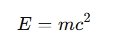
Calculate Energy using Einstein’s Equation
Why Not Use Manual Values?
- Hard-coded values may be inaccurate
- Units can be inconsistent
- Difficult to maintain
They are trusted & standardized
Summary
scipy.constantsprovides scientific & mathematical constants- Covers physics, chemistry, math & engineering
- Includes unit conversions
- Ensures accuracy and reliability
- Essential for scientific computing